
Superior Care for your Heating
and Cooling Systems
Bringing Integrity Back to HVAC

Improve Your Indoor Air Quality Without Restricting Airflow
When homeowners start thinking about indoor air quality, most of them go straight to the filter.
It seems logical. If you want cleaner air, you buy a “better” filter. Usually that means choosing the highest MERV rating available, after all, it says right on the label that it is for improving indoor air quality.
But here’s something most people don’t realize:
Your standard furnace filter was never designed to improve indoor air quality. It was designed to protect your equipment.
And when we try to turn it into an air purifier, we often end up inadvertently restricting airflow and putting the system at risk.
The Real Job of a Furnace Filter
The filter in a residential HVAC system has a simple purpose; it keeps large dust and debris from building up on the blower motor and evaporator coil. This protects the internal components so the system can operate safely and efficiently.
When a filter becomes too restrictive because it is dense (to catch the small particles), airflow drops. When airflow drops, your furnace can overheat, your air conditioner coil can freeze, and your blower motor works harder than it should. As a result, energy bills rise and equipment life shortens.
Here in Colorado, airflow is even more critical. Because of our higher elevation, systems already move slightly less air than they would at sea level. That means there is less room for restriction. A dense filter in a standard 1-inch rack can create more strain than most homeowners realize.
If improving indoor air quality means sacrificing airflow, it’s not really an improvement.
Why the Filter Isn’t the Best Place to Upgrade
Higher MERV filters can capture smaller particles, but they also create more resistance unless the system is specifically designed to handle them. Most residential systems with a 1-inch filter slot were not built for heavy restriction.
Simply upgrading the filter without considering airflow can lead to long-term performance problems.
There is a better approach. We can add solutions that are built specifically to improve indoor air quality, without restricting airflow.
Whole-Home Electronic Air Cleaners
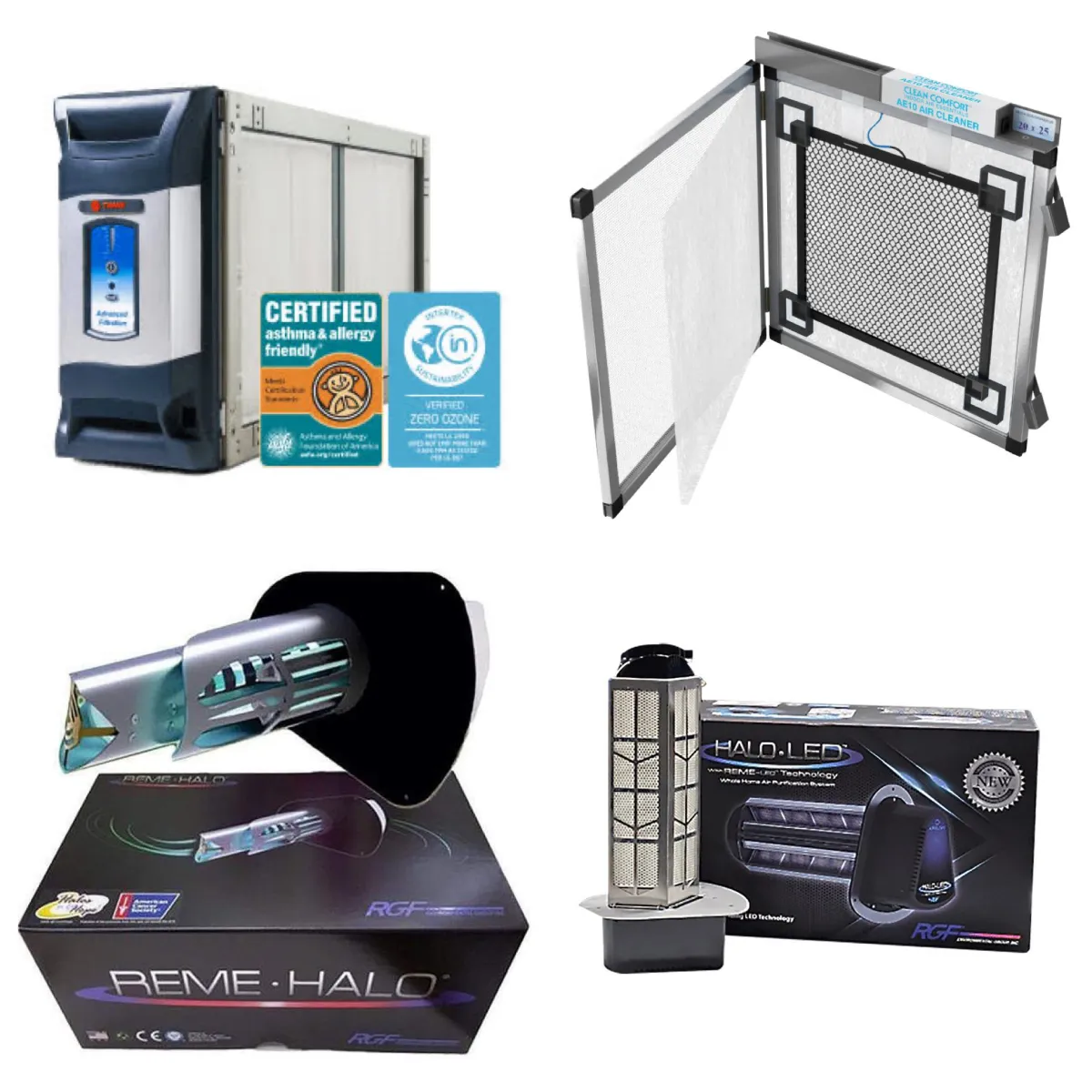
One of the most effective options is a whole-home electronic air cleaner, systems like the Trane CleanEffects. These units replace the standard filter cabinet and use charged collection cells to capture extremely small airborne particles.
The system uses a multi-stage process: a pre-filter captures large particles, followed by an electronic field that charges smaller particles, and a final collector that traps them.
Because these systems provide significantly more surface area and are engineered as part of the system, they can trap fine dust, allergens, and other contaminants while still maintaining proper airflow. For homeowners who want the strongest filtration option without stressing their furnace, this is typically the premium solution and requires some maintenance, to include cleaning out the prefilter once every 3 months and the collection cells at least 1-2 times a year.
In-Duct Air Purification Systems
Another option is an in-duct air purification system. These systems are installed inside the ductwork and actively treat the air as it circulates.
Some use UV light technology. Others use ionization. Some produce low levels of oxidizers, while newer LED versions do not. Systems similar to the Reme Halo or Halo LED are examples of this type of technology.
Instead of relying on thick filter media to trap particles, these systems help reduce airborne contaminants in the air stream itself. There is still a need for a regular furnace filter. Because they are not blocking airflow, they do not create the same strain on the equipment that a restrictive filter can. This system is a mid-range priced system and requires little maintenance in between bulb replacements (usually 3-5 years, depending on which system you choose).
Electronic Air Filtration Systems
Electronic filtration systems, such as the Respicaire style units, use electromagnetic attraction to capture airborne particles. These systems use media similar to a regular filter, but have an aluminum “cage” that electro-magnetizes. They offer enhanced filtration compared to a basic disposable filter while maintaining safe airflow, when properly installed. This is one of the lower cost options for homeowners, and requires little maintenance other than filter media changes.
For some homeowners, this provides a strong middle-ground option between a standard filter and a full electronic air cleaner cabinet.
The Smarter Way to Improve Indoor Air Quality
Indoor air quality matters, especially in Colorado, where we deal with dust, dry air, seasonal allergens, and wildfire smoke, but the solution is not a thicker or denser filter.
Your HVAC system is a carefully balanced machine. When airflow is restricted, efficiency drops and wear increases. True indoor air quality improvements come from adding systems that are designed for purification.
If you want to learn more about how MERV ratings affect airflow and system performance, you can read our companion blog that breaks that down in more detail.
If you’re not sure whether your current filter is actually helping your air, or quietly stressing your system, it’s worth taking a closer look. Every home and its HVAC system is designed differently, and indoor air quality improvements should never come at the expense of airflow or equipment life. The right solution supports both your health and your furnace. That’s what smart HVAC design looks like, and at Pendleton Heating & Cooling, that’s what we do. Call, text, email or reach out on our socials if you want to learn more or to help you choose the perfect system for your needs.

ABOUT US

Our values drive our mission.
We are committed to Excellence in Service.
Pendleton Heating & Cooling!
EXPERIENCED, INSURED, LICENSED & BONDED
Our certificate of insurance is on file with El Paso County Regional Building.
SUPERIOR HOME CARE
Our technicians are trained to take exceptional care of your property, from caring for your carpets with carpet protectors to taking extreme care with your new equipment and post work cleanup!
ACCREDITATIONS
We are HVAC Excellence Certified and also certified with the National Technical Honor Society!
LOCAL TRANE DEALER
We are your local TRANE® dealer! We have one of the highest levels of customer service and our staff is factory trained in the newest developments of TRANE equipment.
Our TestimonialS
Our Clients Feedback Means the World to Us
⭐⭐⭐⭐⭐
Rob Thompson
I've referred Pendleton to my clients, that's how much I trust them! Top notch service, always!
⭐⭐⭐⭐⭐
Tina Friedheim
They were so thorough and helpful! Brandy got me in that day to have them take a look at my furnace. It was a simple fix and taught me what I may look for next time. Outstanding customer service Thank you Pendleton Heating & Cooling for all you do!
⭐⭐⭐⭐⭐
Lara Matisek
I’m so grateful to Kip and Brandy. I had previously hired a master plumber to do my tankless water heater. He did work not up to code and gave me a million excuses about my permit. After learning his work is why it would not pass and I applied pressure to him, he ghosted me after taking $6k of my money. I was looking for a mechanical contractor who is legally permitted to work on this and that’s where Kip comes in. He not only took the job, but did an amazing job. I’m forever grateful to them!
⭐⭐⭐⭐⭐
Sophia Chapman
Prices were great! Honest! Professional!! Will definitely be sticking with them!
Get In Touch
FAQs
How often should I have my HVAC system serviced?
You should have your HVAC system serviced twice a year, once in the spring and once in the fall. This will help to ensure that your system is running efficiently and effectively, and it will also help to identify and prevent any potential problems.
What are the benefits of having a programmable thermostat?
A programmable thermostat can help you to save money on your energy bills by allowing you to control the temperature of your home when you are not there. You can program your thermostat to turn down the heat in the winter and turn up the air conditioning in the summer when you are away or asleep.
What is the best way to choose the right size HVAC system for my home?
The best way to choose the right size HVAC system for your home is to have a load calculation performed by a qualified HVAC contractor. This calculation will take into account the size of your home, the number of windows and doors, the insulation value of your walls and attic, and the climate in your area.