
Superior Care for your Heating
and Cooling Systems
Bringing Integrity Back to HVAC

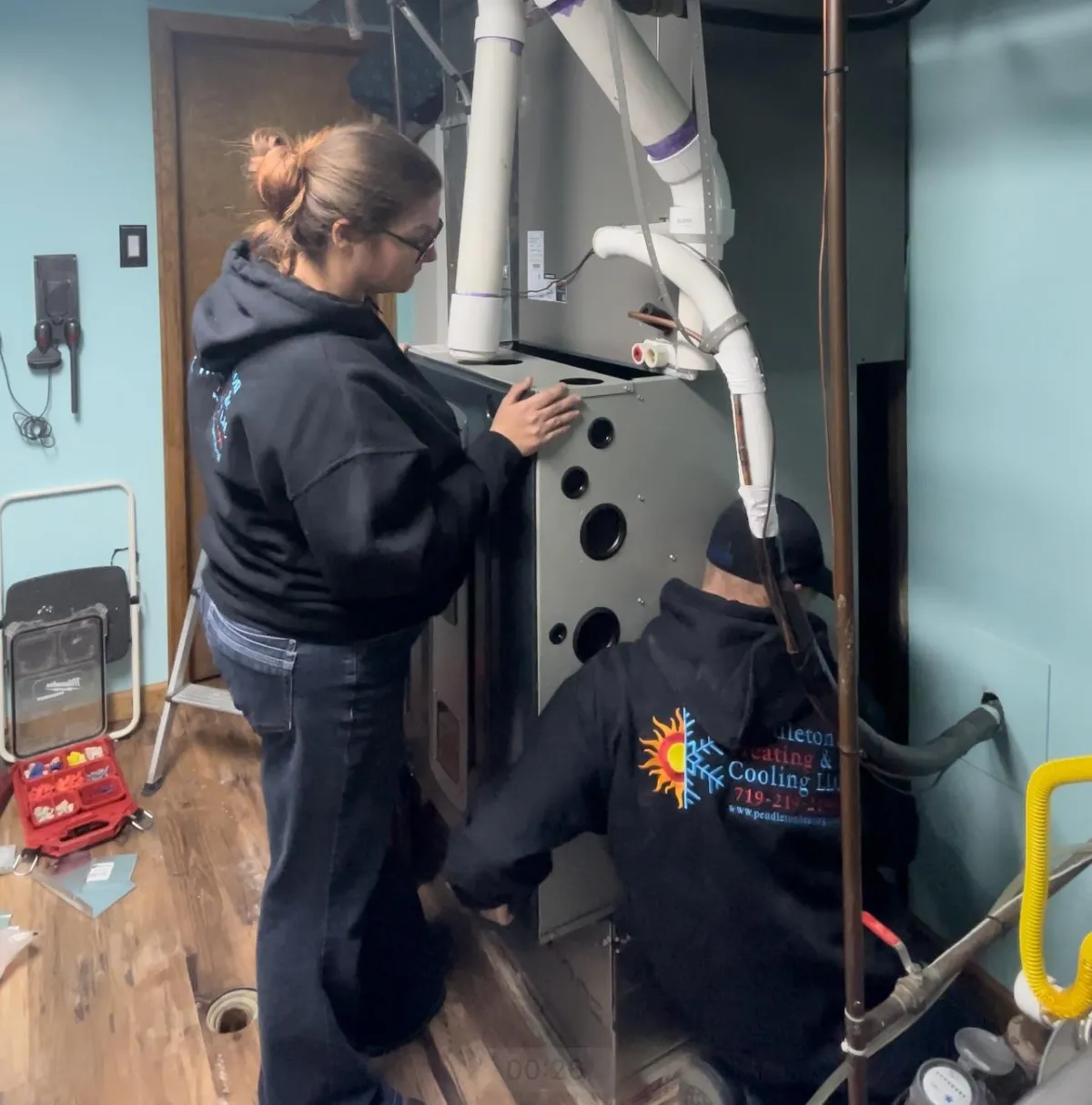
Furnace & A/C Quotes: What You Should Be Comparing (Besides Price)
Are You Really Comparing HVAC Install Quotes “Apples to Apples?”
Getting a few quotes for a new furnace or air conditioner is a smart move. Most homeowners know that. But here’s where things can get confusing; those quotes don’t always mean the same thing.
At first glance, one might look cheaper, another a little higher, and it’s tempting to go with the lowest number. We know that budget matters, but in HVAC, price alone doesn’t tell the whole story. Two quotes can both say “furnace replacement” and be completely different in performance, comfort, and long-term value.
So how do you make sure you’re actually comparing apples to apples?”
What You’re Really Buying
When you replace a furnace or A/C, you’re not just buying an appliance that heats or cools your home. You’re buying how efficiently it runs, how comfortable your home feels, how long it lasts, and how well it was installed. That’s why the details matter.
Take furnace efficiency, for example. You’ll often see something called AFUE, which stands for Annual Fuel Utilization Efficiency. That’s just a technical way of saying how well the furnace turns gas into heat. A 95% furnace doesn’t use less gas to run, it simply uses that gas more effectively, wasting less of it. Over time, that can mean lower utility bills and better performance.
Another thing to consider is how the furnace actually runs. A single-stage furnace is pretty straightforward; it’s either on or off, full blast every time. A two-stage furnace can run at a lower setting most of the time, which helps it heat your home more evenly and can reduce gas usage slightly. But the real benefit isn’t drastic savings, it’s better comfort and more consistent temperatures throughout your home.
The blower motor matters too, even though it’s not something most homeowners think about. The blower motor is what drives the blower wheel and pushes the air through your system. An ECM motor is already more efficient than older styles, but a variable speed motor takes it a step further. It adjusts gradually, runs quieter, and helps keep temperatures more consistent throughout the home. It’s one of those upgrades you don’t always notice right away, but you definitely feel over time.
Warranty is another big consideration. Every system comes with a manufacturer warranty for parts, but labor is separate. Some companies stand behind their work and offer their own labor warranty, and others use third-party plans. Neither is automatically bad, but you want to know who is actually responsible if something goes wrong and how long you’re covered. How long does it last? Who backs it? What’s actually covered? Some third-party warranties sound great upfront but come with limitations that aren’t obvious until you need them.
The brand itself is worth a look. Not all equipment performs the same in the real world, especially in Colorado’s climate and altitude. A quick search like “furnace reviews of _____ brand,” or even better, searching the actual model number, can give you honest feedback from real homeowners. Sites like Reddit, Facebook groups, and Google reviews tend to be more telling than polished marketing pages.
Air Conditioners: Same Idea, Different Numbers
When it comes to air conditioners, you’ll see a different rating, called SEER2. This measures how efficiently your system cools your home over a season. Just like with furnaces, higher efficiency means the system uses energy more effectively, not that it necessarily runs less.
But here’s something that matters just as much, if not more, and often gets overlooked:
If the system isn’t sized correctly, nothing else really matters.
An oversized system will turn on and off too quickly, never properly cooling and over running the system. An undersized system will struggle to keep up on hot days. Either way, comfort suffers and efficiency drops, and risk of freeze up is much higher. A good contractor should be doing more than just guessing, they should be evaluating your home, and ideally performing some kind of load calculation.
Another Important Consideration: The Company Itself
Even if different quotes list similar equipment, the experience you had with each company can tell you a lot.
Think back to the visit. Did they take time to look things over and ask questions? Did they ask about your comfort, your budget, or how long you plan to stay in the home? Or did it feel rushed?
There’s also a difference between someone who understands the equipment and someone who just sells it. That doesn’t mean salespeople are bad, but a technician tends to look at the system as a whole, not just the price tag.
Pay attention to how you felt during the process. Were you comfortable asking questions? Did they explain things in a way that made sense? Or did it feel like you were being steered toward a decision?
Another good sign is whether they gave you options. A “good, better, best” style estimate helps you understand what’s available and where your money is going. If you only received one option, it’s okay to ask why, unless you specifically requested something very particular.
Don’t forget maintenance. A company that offers a clear maintenance plan, and can explain what’s included, is usually thinking long-term, not just about the install.
What’s the “Best Deal”?
The best deal isn’t always the cheapest one. It’s the one that gives you the right balance of comfort, efficiency, reliability, and support.
When you take a little extra time to compare what’s actually included, not just the price, you’ll start to see the differences more clearly. That's when you can make a decision you feel good about.
A Simple Way to Look at It
If two quotes look very different in price, there’s usually a reason. Sometimes it’s obvious. Sometimes it’s hidden in the details.
Either way, you’re not just buying equipment, you’re choosing how your home will feel for the next 10–20 years.
That’s worth a closer look.

ABOUT US

Our values drive our mission.
We are committed to Excellence in Service.
Pendleton Heating & Cooling!
EXPERIENCED, INSURED, LICENSED & BONDED
Our certificate of insurance is on file with El Paso County Regional Building.
SUPERIOR HOME CARE
Our technicians are trained to take exceptional care of your property, from caring for your carpets with carpet protectors to taking extreme care with your new equipment and post work cleanup!
ACCREDITATIONS
We are HVAC Excellence Certified and also certified with the National Technical Honor Society!
LOCAL TRANE DEALER
We are your local TRANE® dealer! We have one of the highest levels of customer service and our staff is factory trained in the newest developments of TRANE equipment.
Our TestimonialS
Our Clients Feedback Means the World to Us
⭐⭐⭐⭐⭐
Rob Thompson
I've referred Pendleton to my clients, that's how much I trust them! Top notch service, always!
⭐⭐⭐⭐⭐
Tina Friedheim
They were so thorough and helpful! Brandy got me in that day to have them take a look at my furnace. It was a simple fix and taught me what I may look for next time. Outstanding customer service Thank you Pendleton Heating & Cooling for all you do!
⭐⭐⭐⭐⭐
Lara Matisek
I’m so grateful to Kip and Brandy. I had previously hired a master plumber to do my tankless water heater. He did work not up to code and gave me a million excuses about my permit. After learning his work is why it would not pass and I applied pressure to him, he ghosted me after taking $6k of my money. I was looking for a mechanical contractor who is legally permitted to work on this and that’s where Kip comes in. He not only took the job, but did an amazing job. I’m forever grateful to them!
⭐⭐⭐⭐⭐
Sophia Chapman
Prices were great! Honest! Professional!! Will definitely be sticking with them!
Get In Touch
FAQs
How often should I have my HVAC system serviced?
You should have your HVAC system serviced twice a year, once in the spring and once in the fall. This will help to ensure that your system is running efficiently and effectively, and it will also help to identify and prevent any potential problems.
What are the benefits of having a programmable thermostat?
A programmable thermostat can help you to save money on your energy bills by allowing you to control the temperature of your home when you are not there. You can program your thermostat to turn down the heat in the winter and turn up the air conditioning in the summer when you are away or asleep.
What is the best way to choose the right size HVAC system for my home?
The best way to choose the right size HVAC system for your home is to have a load calculation performed by a qualified HVAC contractor. This calculation will take into account the size of your home, the number of windows and doors, the insulation value of your walls and attic, and the climate in your area.